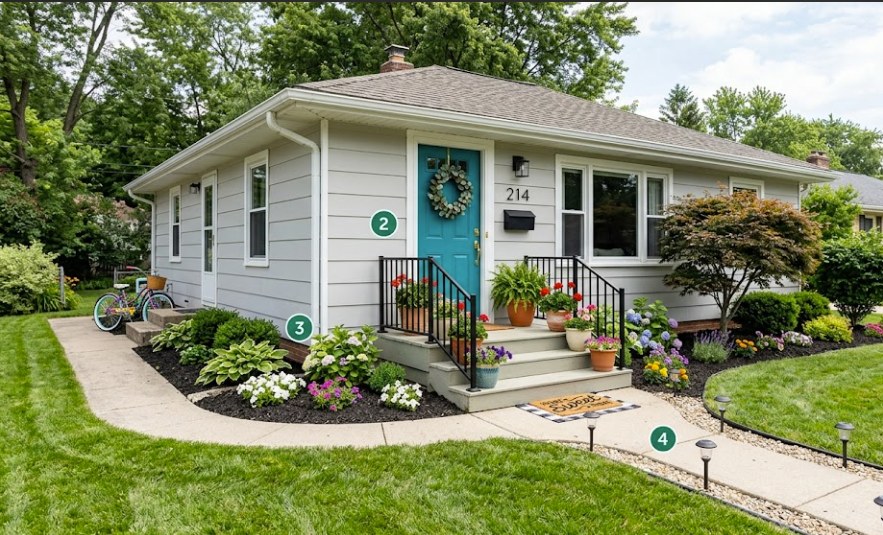
Here's something I've watched happen hundreds of times. A buyer pulls up to a house, and before they've unbuckled their seatbelt, they've already decided how they feel about it. The inside might be flawless, but if the outside reads "tired" or "neglected," they walk in hunting for problems. If it reads "cared for," they walk in ready to fall in love. That whole verdict gets rendered in about eight seconds, from the driveway, and it colors everything after.
The encouraging part is that those eight seconds are the cheapest stretch of your entire sale to fix. You don't need a landscaper or a renovation budget. You need to know which handful of things a buyer's eye registers, and which ones quietly eat a Saturday without changing the outcome. In West Michigan, where a buyer might tour six houses in an afternoon, the home that presents clean from the street is the one they remember when it's time to write an offer.
Why the First Eight Seconds Carry So Much Weight
First impressions aren't really about beauty. They're about signals. A buyer on your sidewalk isn't consciously grading your hydrangeas. Their brain is running fast, cheap math on one question: has this home been cared for, or let go? Everything they see from the curb becomes evidence one way or the other. A crisp, mowed lawn hints that the furnace filters probably got changed too. Peeling trim and a clogged gutter whisper that there might be deferred maintenance hiding behind the walls, even when there isn't.
That's the real reason curb appeal pays. It isn't vanity. It sets the lens the buyer looks through for the rest of the showing. Start them on the "cared for" side and small flaws inside get forgiven. Start them on the "neglected" side and they're tallying imaginary repair bills before they reach the kitchen. You're not decorating, you're managing the story the house tells before you get a word in.
What Buyers Actually Notice
The signal is mostly cleanliness, order, and a sense that someone here pays attention. A freshly mowed lawn with clean edges reads as "maintained" before a buyer can name why. An uncluttered driveway and walkway, no oil stains, no weeds in the cracks, no garden hose in a heap, says the same thing without a word.
The front door is the single highest-leverage spot on the property. It's where the buyer stands still for thirty seconds while the agent works the lockbox, so it gets more uninterrupted attention than anything else. A coat of paint in a confident, classic color, clean hardware, fresh house numbers, and a simple planter beside the step do more for a buyer's mood than almost any other dollar you spend. Then there's the entry zone around it. The porch light, mailbox, welcome mat, and doorbell all sit at eye level during that pause, and a corroded fixture or faded mat undercuts everything else you did. Replace the worn pieces and that little stage reads finished.
The Cheap Fixes That Punch Above Their Weight
A few hours and a few hundred dollars, spent in the right places, change the entire feeling of a property. Power-washing is usually the biggest bang for the buck. Siding, walkway, and driveway collect grime so gradually that owners stop seeing it, while buyers see it the instant they arrive. A rented pressure washer and an afternoon take a house from dingy to bright, no paint required.
Trimming comes next. Cut the bushes back off the windows and away from the entry so the house looks open and tended instead of swallowed. Overgrown shrubs darken rooms inside, too, so this one quietly helps your interior showings. Then handle the beds. Pull the weeds and lay fresh mulch; that dark, tidy border makes everything inside it look intentional for the price of a few bags. Finally, the lawn. Keep it green and edged through the listing period, because a buyer touring on week three judges the grass that day, not the photos from week one.
A note on timing for our climate. West Michigan listings move through real seasons, so curb appeal looks different in March than in July. Early spring rewards a hard cleanup against flattened beds and road sand; fall is about staying ahead of the leaves; winter becomes a cleanly shoveled, salted walk and a lit porch. Match the effort to the season you're selling in.
Where Not to Spend Your Money
Knowing where curb-appeal dollars vanish is just as valuable as knowing where they work. Don't pour money into elaborate new landscaping right before a sale. Expensive plantings rarely return what you put in, and the next owner may pull them out anyway to make the yard their own. The point of pre-sale landscaping is tidy, not impressive.
Don't repave a driveway that's merely stained. Replacing asphalt or concrete is a large expense, and a thorough power-wash, plus filling obvious cracks, fixes the impression for a fraction of the cost. Save the replacement conversation for a driveway that's genuinely failing. And skip the trendy, polarizing front-door color. A bold shade photographs beautifully and turns off half the people who pull up. Aim for clean and classic. The goal isn't to win a design award; it's to remove every reason a buyer's first glance could find to feel uneasy.
One more piece of restraint. Resist the urge to take on big-ticket exterior projects, a new roof, new windows, a full repaint, purely "for curb appeal" in the final weeks. Whether those pay off depends entirely on your home, your price point, and what comparable listings are doing. That's a conversation to have with your REALTOR® against actual market data first, not a default move. Sometimes the smarter play is to price the home to reflect its condition and let the buyer choose. The cheap, cosmetic fixes almost always make sense; the expensive structural ones deserve a second look first.
The Bottom Line
Before you spend a dollar, try a free exercise. Park across the street and walk up to your own front door the way a buyer would, pretending you've never seen the place. Most owners stopped seeing their own house years ago, so the faded numbers and burned-out coach light have gone invisible through familiarity. Photograph the front from the street, too, because the camera reveals clutter your eye edits out, and it's the exact view a buyer scrolling online judges first. Then mow, wash, trim, weed, and freshen the entry, and you've turned that critical first impression in your favor for the price of a weekend and a hardware-store run. If you'd like a second set of eyes on what your home is telling buyers from the curb, that walkthrough is something I do with sellers before we ever list, and it tends to pay for itself many times over by the time the offers come in.