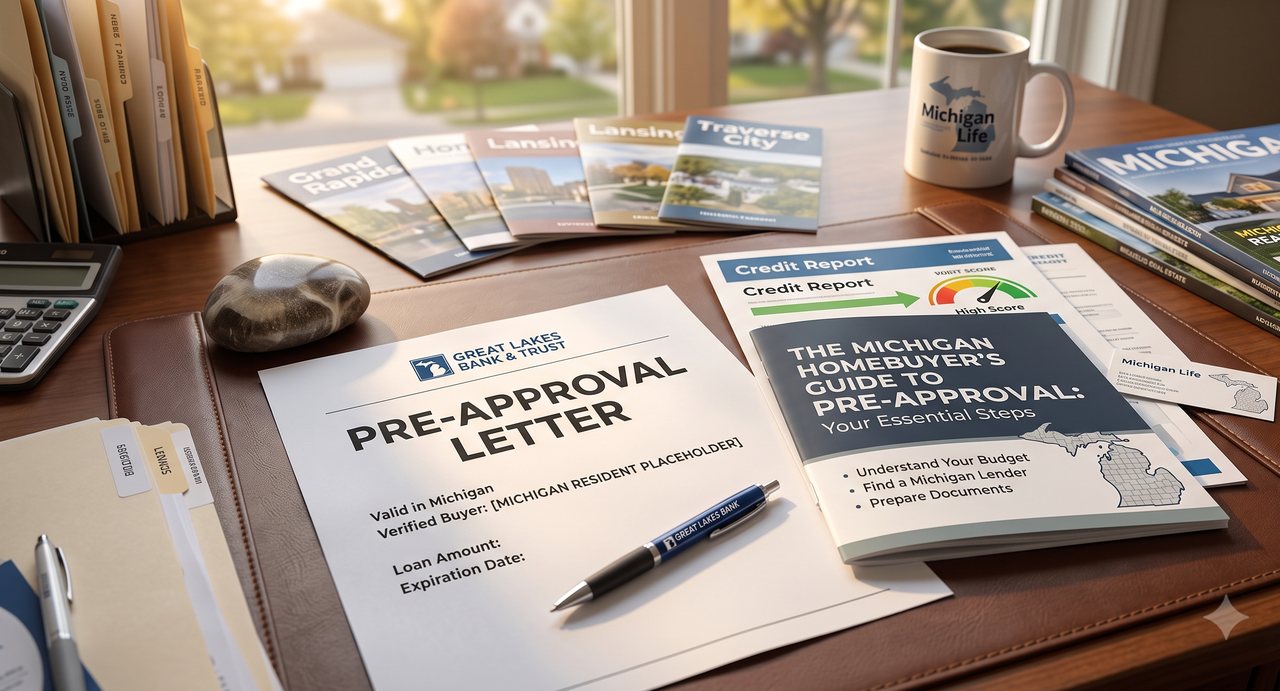
In West Michigan right now, a well-priced home in the $200,000 to $350,000 range can land several offers in its first weekend. When a seller compares those offers, one of the first things they look at is the lender letter stapled to each one. A buyer with a real pre-approval reads as someone who can close. A buyer with only a pre-qualification reads as someone who might be able to, eventually, if everything checks out. That gap is the whole reason these two words matter, and it is exactly what trips people up, because they sound almost identical and lenders do not always explain the difference. Getting this right early is one of the cheapest advantages you can give yourself in a competitive market.
Pre-qualification is a conversation, not a commitment
A pre-qualification is a quick, informal estimate. You tell a lender what you earn, roughly what you owe, and a ballpark of your credit, and they hand back a number you could probably afford. Nothing has been verified. No pay stubs were pulled, no credit report run in most cases, no underwriter involved. It is a back-of-the-napkin figure built entirely on what you said about yourself.
That is not an insult to the process. Pre-qualification is genuinely useful at the very beginning, when you are trying to figure out whether you are shopping in the $250,000 neighborhood or the $400,000 one. It costs almost nothing and gives you a sense of direction before you start touring homes. What it cannot do is carry an offer, because a seller has no way to know whether the numbers behind it are accurate when nobody checked them. So treat it as a planning tool, not as ammunition for the negotiating table.
Pre-approval is the version a seller can trust
A pre-approval is the real thing. Here the lender actually verifies your financial picture: they pull your credit, review your income documentation, confirm your employment, and look at your assets. An underwriter (or an automated underwriting system) reviews the file and issues a letter stating that, based on documented information, you qualify for a loan up to a specific amount under specific conditions. That verification is what gives the letter its weight.
The practical payoff shows up in three places. Your offer is credible, because the seller can see a lender has done the homework and put it in writing. You know your real number instead of a guess. And once you are under contract, the path to final loan approval is shorter, because much of the heavy lifting is done. In a market where a fast, clean close is itself a selling point, that head start has real value. Be precise about the language, though: a pre-approval is a strong, documented opinion, not a guarantee. Final approval still depends on the property, the appraisal, the title work, and your finances staying consistent through closing. That is why nobody should make a major purchase or change jobs in the middle of buying a house.
What the lender will actually ask you for
Getting pre-approved means handing over documentation, and knowing what is coming makes the afternoon painless. Expect to provide recent pay stubs covering about the last 30 days, W-2s and often full tax returns for the past two years, and recent statements for your bank and any accounts you would use for the down payment and reserves. The lender will verify your employment and run your credit, and if you are self-employed or your income is not a straightforward salary, plan on a bit more paperwork. Gather it all once, up front, and you will not be scrambling later when there is a house and a ticking clock involved.
One thing worth understanding: the figure on your letter is what you qualify for, which is not always what you should spend. The lender is answering "how much will we lend," a different question from "what payment feels comfortable once you add taxes, insurance, maintenance, and the rest of your life." Decide your own comfortable number first, and let the letter be a ceiling, not a target.
Why this matters more in a market like ours
West Michigan has been a tight market for a while, especially along the lakeshore and in the more affordable price bands where first-time and move-up buyers cluster. When inventory is short and good homes draw competing offers, sellers can be selective, and the strength of your financing becomes part of how attractive your offer looks. Two offers at the same price are not equal if one is backed by a verified pre-approval and the other by a soft pre-qualification. The seller and their agent will lean toward the buyer most likely to reach the closing table without a financing surprise.
This is also why showing up with only a pre-qualification can quietly cost you the house, often without your ever hearing that your offer was passed over for being weaker on paper. Most West Michigan sellers expect a pre-approval letter with a serious offer, and many listing agents ask for one before they will present it. Coming in without it is like showing up to an audition without the sheet music: you might be perfectly capable, but you have given the other side a reason to doubt it.
Keep your approval fresh, and keep your finances steady
A pre-approval does not last forever. Lenders typically set them to expire after a couple of months, often in the 60 to 90 day range, because your credit and income picture can change. If your search runs longer, a quick check-in usually refreshes the letter without starting from scratch. The avoidable mistake is letting it lapse in the exact week the right home appears, then losing days you do not have while the paperwork catches up.
Just as important is keeping your financial life boring while you shop. Do not open a new credit card, finance a vehicle, change jobs, or move large sums between accounts without talking to your lender first. Any of those can change the numbers the pre-approval was built on and complicate, or even unwind, your financing right when you can least afford it. When in doubt, ask first.
The bottom line
Pre-qualification opens the door and helps you figure out where to look. Pre-approval gets you inside, because it is the version a seller can actually trust. The first is a friendly estimate based on what you said; the second is a documented opinion a lender is willing to stand behind. In a market that moves this quickly, that difference is often what separates the offer that gets accepted from the one that gets passed over. When you are ready to start, I am glad to connect you with local lenders who explain the process clearly and move fast, so that when the right home shows up, the only thing left to do is write the offer.