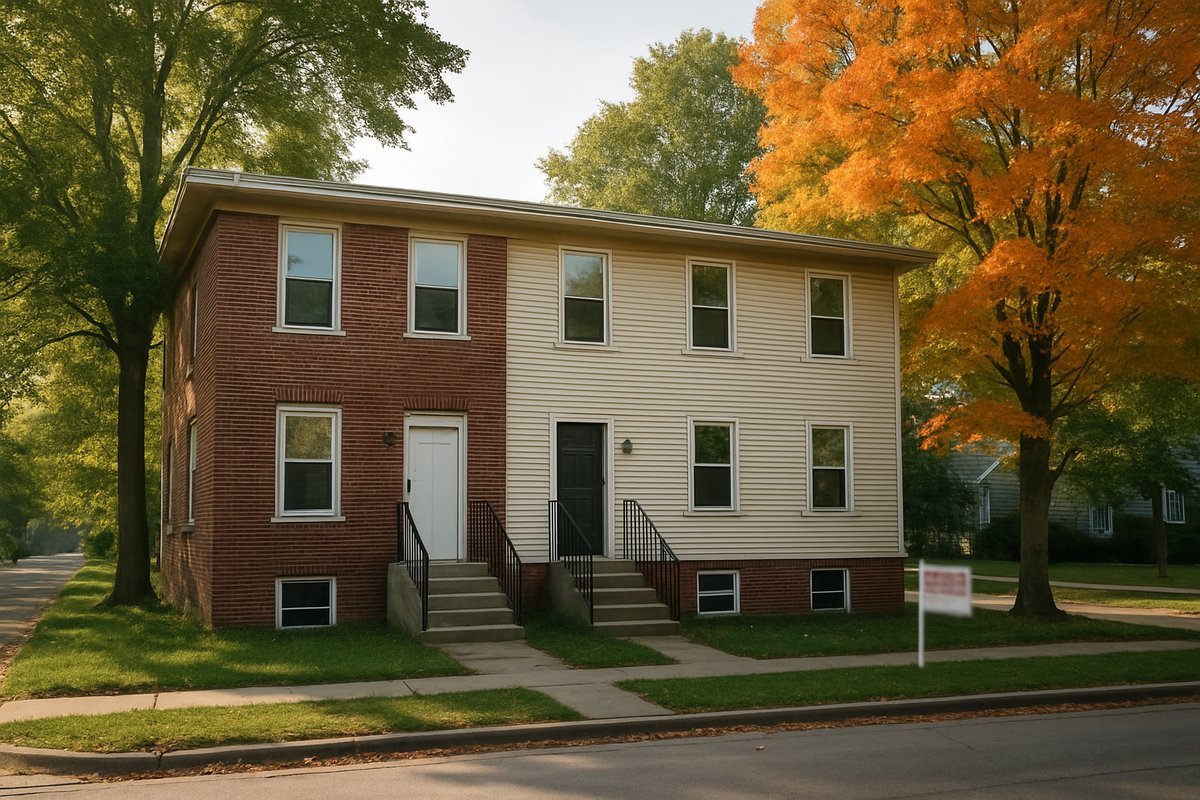
I spent a day recently touring five multifamily properties with a client. Every one of them had at least three units. The goal was simple on paper: find something that cash flows, let my client live in one unit while he fixes the place up, shuffle tenants around, improve the property, then eventually move off site, raise rents to market, and turn the whole thing into a long term asset where the tenants pay his mortgage. That is a good plan. It is also a plan that lives or dies on the numbers being real.
And here is the part nobody warns new investors about: the numbers in the listing are almost never the numbers you will actually live with.
The 7.9 percent that was really 4 percent
One of these properties was marketed as a 7.9 percent cap rate opportunity. That sounds great. If you take the current rents, subtract the current expenses, and divide by the price, sure, you land somewhere around there. The problem is that the current expenses include the current property taxes, and the current property taxes are based on what the current owner has been paying under Michigan's assessment rules. The day my client closes, that changes.
When I ran the real numbers, factoring in what the taxes will actually be after the sale, that shiny 7.9 percent dropped to roughly 4 percent. Same building. Same rents. Same everything. The only thing that moved was the truth. That is not a rounding error. That is the difference between a deal that pays you and a deal that quietly bleeds you every month.
Why Michigan taxes jump the moment you buy
This is the piece that catches almost everyone, and it is specific to how Michigan works. Under Proposal A, a property's taxable value is capped year to year and can only rise by a limited amount while the same owner holds it. That cap can hold taxable value well below the actual market value for a long time, especially on a property someone has owned for years.
When the property sells, that cap comes off. The following year the taxable value "uncaps" and resets toward the current state equalized value, which tracks market value. On a long-held building, that can mean a significant jump in the annual tax bill. The seller has been enjoying a capped number. You will inherit an uncapped one. If your analysis uses the seller's tax figure, your analysis is fiction before you even sign.
I am not a CPA or a tax attorney, and this is educational, not tax advice. But every investor buying in West Michigan should understand the concept, and should confirm the real projected numbers with the local assessor and with their own tax professional before they commit.
Cap rate is a story, and someone else is telling it
A cap rate is just net operating income divided by price. It feels objective because it is a percentage, but every input is a choice. Whose rent numbers? Are they market rents or optimistic "pro forma" rents the current tenants are not actually paying? Whose expense numbers? Do they include real vacancy, real maintenance, real management, and the taxes you will actually owe, or the taxes the seller owes?
When a listing hands you a cap rate, understand that someone chose the inputs, and that someone is trying to sell you the building. That does not make them dishonest. It makes them a seller. Your job, or the job of the REALTOR(R) representing you, is to rebuild that number from the ground up using assumptions you can defend to yourself at midnight when a furnace dies.
The owner-occupant angle changes the math too
My client's plan to live in one unit adds a wrinkle worth naming. While he occupies a unit, that unit is not generating rent, so the income side of the equation shrinks during his stay. But living there may open financing options that pure investors do not get, and it lets him renovate up close and reposition the building over time. The long game is strong. The short game still has to survive the first year, and the first year is exactly when the tax reset hits hardest.
This is why I do not just look at what a property is. I look at what it becomes on your timeline, with your uses, under your financing, at your real tax bill. A building that limps at a 4 percent starting point can still be a great long term asset once rents are brought to market and the property is improved. But you have to buy it knowing you are starting at 4, not 7.9, so you pay the right price and you are not shocked in month two.
What running the numbers actually looks like
When I underwrite a small multifamily for a client, I start with actual signed leases, not asking rents, so I know what is really coming in the door. Then I estimate what the taxes will be after uncapping, not what they are today. I add honest line items for vacancy, repairs, capital reserves for the big stuff like roofs and mechanicals, insurance that reflects current West Michigan pricing, and management even if you plan to self-manage, because your time is not free. Only then do I look at a return, and I look at it as a range, not a single confident number.
Half the time this process kills a deal, and that is a good outcome. I would rather talk a client out of a 4 percent building wearing a 7.9 percent costume than watch them close and regret it. The other half of the time, running honest numbers reveals the price where the deal actually works, and that becomes the negotiating strategy.
The quiet reason I love this work
Here is the honest truth about why days like this are my favorite. There is something genuinely satisfying about sitting with a client, opening the spreadsheet, and watching a property tell its real story instead of its sales story. Cash investors do this math in their heads and buy for themselves. A for-sale-by-owner seller will hand you their rosiest version because that is their job. When you have a REALTOR(R) representing you and only you, that person is on your side while the numbers get stress tested, and that changes what you are willing to pay and whether you should walk.
If you are looking at multifamily in West Michigan, or any income property really, do not take the cap rate on the flyer at face value, and do not assume today's tax bill is your tax bill. If you want a second set of eyes on the actual numbers before you make an offer, I am glad to sit down and run them with you. No pressure, no obligation. Sometimes the most valuable thing I can tell a client is that the deal is not the deal it appears to be.