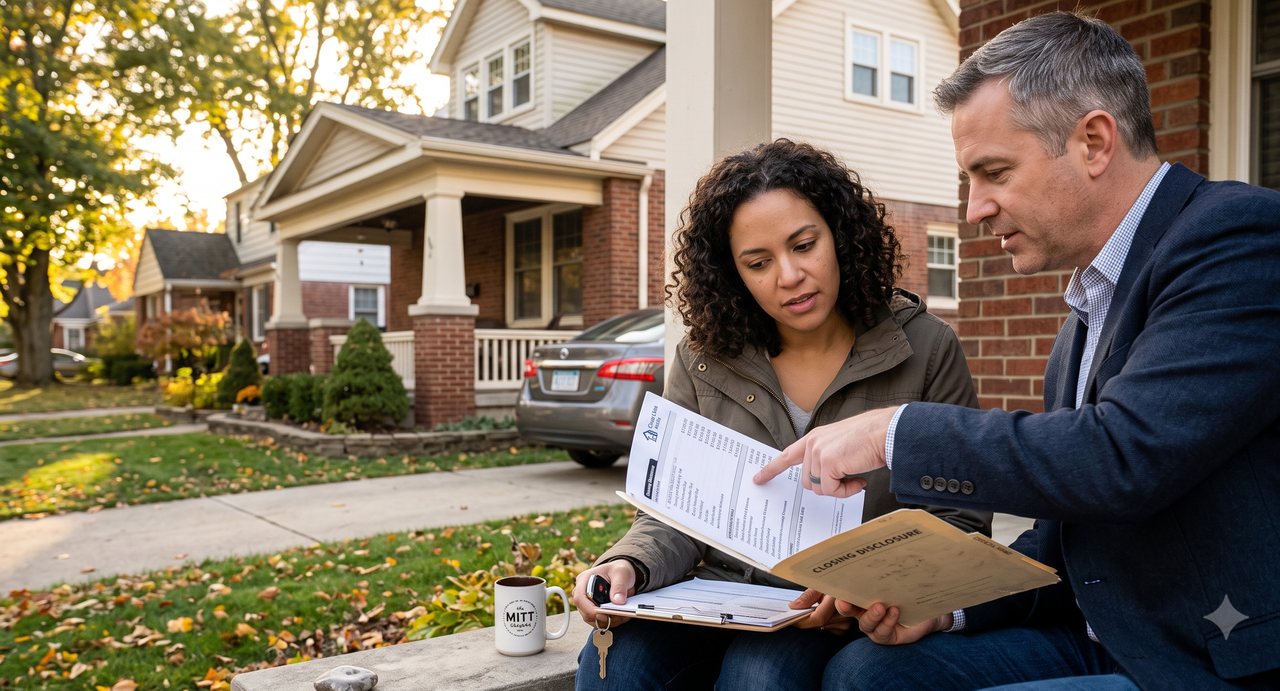
You have made it through the offer, the inspection, the appraisal, and the negotiation. The last step before the keys change hands is closing, and closing costs are the fees that make that transfer official. They are not a penalty or a gotcha. They are the cost of turning a signed contract into a recorded deed and a funded loan, and in Michigan they typically run 2 to 5 percent of the purchase price. On a $250,000 home that is roughly $5,000 to $12,500. Here is what actually sits inside that number, who pays it, and the part most people never get told: when you will finally see the real figures.
What closing costs actually are
It helps to think of closing costs in four buckets. There are lender fees for originating and underwriting your loan. There is title work, which protects your ownership and your lender's lien. There are government charges for recording the documents and the state and county transfer taxes. And there are prepaid items and escrow reserves, which are not really fees at all but money you fund up front for your own taxes and insurance. Almost every line on your statement falls into one of those four groups, and once you can sort them that way, the whole page stops looking like a mystery.
The buyer's side, line by line
Lender fees. Your lender charges to process the loan. You may see an origination or underwriting fee, and if you choose to buy down your interest rate, discount points. These vary more between lenders than people expect, which is the single biggest reason to get more than one Loan Estimate before you commit.
Appraisal and credit. The appraisal confirms the home is worth what you are paying, and the credit report fee covers pulling your file. These are usually a few hundred dollars each and are often paid during the process rather than at the closing table.
Title insurance and settlement. Your lender requires a lender's title policy to protect its loan. You also have the option of an owner's policy, which protects your equity if a claim against the title ever surfaces, and it is worth having. Add the title company's search and settlement fee for handling the closing itself, and title is often the largest single category on a buyer's statement.
Recording and government fees. The county charges to record your deed and mortgage so your ownership is public and official. These are modest, but they are required.
Prepaids and escrow. This is the part that catches first-time buyers. You will prepay interest from your closing date to the end of the month, fund the first year of homeowners insurance, and put several months of property taxes and insurance into an escrow account so your lender can pay those bills when they come due. In Michigan you will also see a property tax proration, where the year's taxes are split between you and the seller based on the closing date. None of this is a fee. It is your own money, parked for your own bills.
The seller's side
Sellers have their own column. The largest items are usually agent compensation and, in Michigan, the state and county transfer taxes. The state transfer tax runs $3.75 per $500 of price, and the county adds its own smaller amount, so on a $300,000 sale the combined transfer tax lands around $2,580. Depending on local custom and what the contract says, a seller may also cover the owner's title policy, a share of the title fees, and the payoff and recording costs to clear the existing mortgage. Sellers see the other side of that tax proration too, as a credit or a debit depending on timing.
The part nobody explains: when you actually see the numbers
This is where experience matters more than any chart, because the costs arrive on two different clocks. Your lender's figures come early. You get a Loan Estimate within three business days of applying, and federal rules require the lender to deliver the Closing Disclosure, with their final loan costs, at least three business days before you sign. That gives you real time to read it.
The title company's settlement statement is a different story. The actual buyer's and seller's statement, the document with every real number on it, often is not ready until the day before closing, and sometimes the morning of. That is normal, not a red flag. The lender can hand over their costs ahead of time, but the title company is still reconciling payoffs, prorations, taxes, and credits right up to the end. So plan for it. Read the Closing Disclosure carefully when it lands three days out, and the moment the title company's statement comes through, have your REALTOR® compare it line by line against that disclosure and your purchase agreement. Catching a misplaced proration or a duplicated fee the day before is routine when someone is actually checking the math, and expensive when no one is.
Who pays what, and how to keep it down
Plenty of this is negotiable. It is common in Michigan for a buyer to ask the seller to cover part of their closing costs, which is especially useful on FHA and VA loans where keeping cash in your pocket matters. Within your loan program's limits, a seller concession can ease the cash you bring to the table without moving the price much. On your own costs, the levers are simple. Shop more than one lender, because their fees genuinely differ. Ask whether a lender credit in exchange for a slightly higher rate makes sense for how long you actually plan to stay. And ask for your Loan Estimate early, so nothing on closing day is the first time you are seeing it.
The bottom line
Closing costs stopped being a gotcha the day buyers started planning for them. The work is in knowing what each line is, what is genuinely a fee versus your own money funding your own bills, and when the real figures will show up so someone can check them before you sign. If you are buying or selling in West Michigan this year, I will build you a personalized estimate before we start, walk the Closing Disclosure with you when it arrives, and read the final settlement statement with you the moment it lands. Clarity first, paperwork second, and no surprises on signing day.