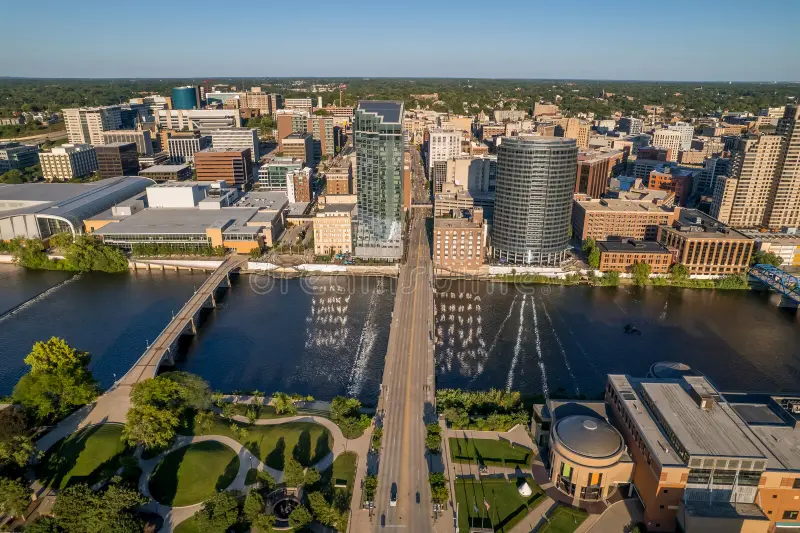
A few years ago, when I told someone from out of state that I sold real estate along the West Michigan lakeshore, I usually had to explain where that was. That does not happen anymore. I now field calls from families in Chicago, transplants who landed in Detroit and wanted more room, and remote workers who realized that if their job lives on a laptop, they would rather look at Lake Michigan than a parking garage. If you are thinking about a move here, or you already live here and want to understand why it suddenly feels so competitive, let me walk you through what is actually happening on the ground.
Who is moving here, and why it makes sense
The migration into West Michigan is not one story, it is three overlapping ones. The first is people leaving bigger and pricier metros. When you are used to Chicago or Denver pricing, a well-built home within a short drive of freshwater beaches can look like a genuine bargain, even after the recent run-up in prices. The second is people already in Michigan moving west for lifestyle: shorter commutes, four real seasons, and towns where you run into people you know. The third is investors and second-home buyers who watched the lakeshore hold its value.
What ties all three together is a simple trade. Buyers are choosing quality of life over square footage of luxury, and that appeal is durable because it is built on things that do not move: the lake, the geography, and a regional culture that values staying put.
The jobs followed the people
For a long time, the knock on West Michigan was that the lifestyle was great but you had to leave to find serious work. That has shifted. Grand Rapids and Holland have seen meaningful reinvestment from employers in health care, manufacturing, and the technology and design firms that cluster around them. Remote and hybrid work then widened the net further, because a lot of the people moving here do not need a local employer at all.
That combination, real local employers plus a wave of location-independent earners, turned West Michigan from a place people retired to into a place people build careers and families in. It also explains why demand stayed resilient even when interest rates climbed: the buyer pool is broader than it was a decade ago, and a broader pool is harder to scare off.
Why it feels so tight to buy right now
Here is the part buyers feel in their gut before anyone explains it: there are not enough homes. For years, the lakeshore market has run on low inventory, often well under the rough five-to-six-month supply that economists consider balanced. When supply sits that low, you get the conditions buyers keep running into. Homes priced right move quickly, the best properties draw multiple offers, and there is real pressure to make a clean, strong offer.
The competition is sharpest at the lower end. Entry-level and mid-range homes, the ones first-time buyers and young families are chasing, are exactly where inventory is thinnest and bidding is most intense. Move up the price ladder and the pressure eases. There are fewer buyers at the higher tiers, which usually means more time to think and more room to negotiate.
The encouraging news is that new construction has been working to close the gap. Builders across the region have leaned in, and every new home that comes online takes a little pressure off the resale market. It is not an overnight fix, building takes time and is sensitive to material and labor costs, but the direction is right. The market is not balanced yet, especially on the affordable end, but it is moving that way.
What I expect through the rest of 2025
I want to be careful here, because nobody can promise you where prices land, and anyone who quotes you a precise number a year out is guessing. What I can tell you is the shape of it. The most likely path is steady, not a spike and not a crash. Prices have generally appreciated at a moderate pace rather than the double-digit jumps some pandemic-era markets saw, and steady appreciation keeps a market healthy.
The reason I lean toward steady is that demand is not going anywhere. Migration into the region is structural, not a fad, and structural demand puts a floor under prices even when borrowing costs rise. Rates are the wild card. If they ease, expect more buyers back in and competition to heat up. If they stay elevated, expect the slower, more negotiable conditions to persist, which is not bad news if you are the one buying.
How to actually use this if you are buying or selling
If you are buying. Timing can work in your favor. The spring rush is the most crowded stretch of the year, and the market often loosens as summer turns to fall, which can mean less competition for the same home. Get fully pre-approved before you shop, not just pre-qualified, so that when the right house appears you can move without scrambling. Talk to a lender early about your real numbers, because what you can comfortably afford and what a calculator says you qualify for are not always the same. Your lender quotes the rate; my job is to find the home and write the offer that wins without overpaying.
If you are selling. Tight inventory is your tailwind, but it is not a license to skip the work. Well-prepared, accurately priced homes draw the multiple offers, and overpriced ones sit even in a seller's market and then sell for less after a price cut. Price to the actual comparable sales in your specific neighborhood, because the lakeshore is not one market, it is dozens of micro-markets that behave differently a few miles apart.
If you are relocating from out of the area. Give yourself a guide. The difference between Spring Lake, Norton Shores, Muskegon, Grand Haven, and the smaller communities in between is hard to feel from a listing site. School districts, commute patterns, flood and dune considerations near the water, and resale strength all vary, and a wrong guess on a relocation is expensive.
The honest bottom line
West Michigan is not a hidden gem anymore, and that cuts both ways. The same things that make people want to move here, the lake, the towns, the value relative to bigger metros, are exactly what makes it competitive to buy in. That is not a reason to wait or to panic, it is a reason to go in informed. Whether you are coming from across the country or moving across town, I would rather give you a clear, honest read on your situation than sell you a slogan. If you want a real market snapshot for the area and price range you are considering, reach out and let's talk.