
Most of what decides a sale happens before the first showing: the price, the condition, and the first two weeks on the market. After an offer, the work turns into dates. The inspection, the appraisal, the buyer's loan, and the title work each have a deadline in the contract, and the money you walk away with comes out of a handful of costs you can know in advance.
Start with where you are going next. Buying another home, relocating, downsizing, or renting for a while each changes your timeline, how much prep makes sense, and when you need the money. Then work through these eleven chapters in order.
Pricing from recent sales
A price that works comes from what buyers have actually paid for homes like yours, nearby, recently. Online estimates are a starting point, but they cannot see your kitchen, your basement, or the road you are on, and those details move real dollars.
How the number gets built
The pricing work, called a comparative market analysis, starts with homes that sold within about the last 90 days, close by, and similar in size, age, style, and condition. Each one gets adjusted for the differences: a finished basement, an updated kitchen, a garage, an extra bath, acreage. Homes that are for sale now show what buyers will compare yours with. Homes that are pending show where the market is heading. And listings that expired without selling show which prices buyers would not pay.
What the market looks like now
In September 2026, 1,910 homes sold across the 15 counties Legacy covers, at an average of $393,138, in 30.2 days on average. At the end of the month 4,859 homes were for sale, the most this year, which is about two and a half months of homes at September's pace. Homes took longer to sell as the summer ended: about 23 days in July, 26 in August, and 30 in September. Buyers have more to compare than they did in the spring, and that shows up most on homes priced above their comparable sales.
Your county's numbers are on the Insights page, updated each month, and your street's numbers come from the comparable sales.
Price for the search, not the sign
Buyers search in round brackets. A home at $299,900 appears in every search that tops out at $300,000; at $305,000 it does not. The same thing happens at every bracket line. Price to land inside the range where your buyers are looking, at a number the comparable sales support. Starting high to leave room to negotiate usually costs more than it gains, because the first two weeks are when the most buyers see a new listing.
Prep that pays, and prep that doesn't
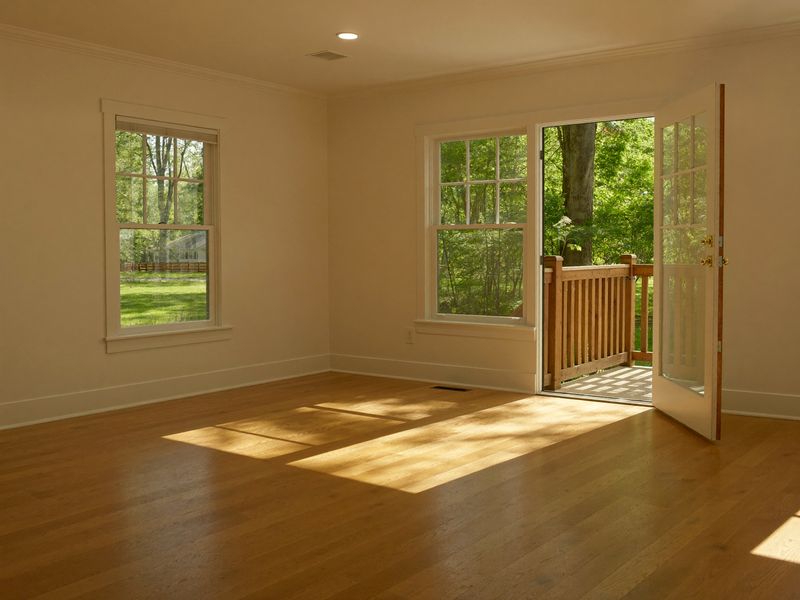
You do not need to renovate. You need the home to show well and to get through a buyer's inspection without surprises. Walk through it the way a buyer will, and spend money only where a buyer will notice or an inspector will write it down.
Prep that usually pays
- A deep clean, top to bottom, including windows, carpets, and the inside of the oven.
- Less stuff in every room. Clear counters, half-empty closets, and personal photos packed away make rooms look larger in photos and in person.
- Paint touch-ups in light, neutral colors where walls are scuffed or bold.
- The small repairs an inspector lists: a dripping faucet, a missing outlet cover, a loose railing, a stuck window, a running toilet.
- Service records for the furnace and air conditioning, and a fresh furnace filter.
- The outside: a mowed lawn, trimmed shrubs, fresh mulch, a clean front door, and working porch lights. The front of the house is the first photo.
- Bright lighting: working bulbs in every fixture, matched in color.
Prep that usually doesn't
A kitchen or bathroom remodel right before listing rarely comes back in full at the sale price, and it delays the listing. New carpet in a room buyers may change anyway, high-end finishes in a home priced for the middle of the market, and projects started and not finished all tend to cost more than they return. If something big is failing, like a roof at the end of its life, get a repair quote so you can price around it or offer a credit, instead of guessing.
A pre-listing inspection
Some sellers hire their own home inspection before listing. It costs a few hundred dollars and tells you what a buyer's inspector will find while you still have time to fix it, price around it, or disclose it. It also means anything it finds belongs on your seller's disclosure, which is the point: no surprises later in the deal.
The launch and the first two weeks
A well-priced home in West Michigan typically sees its best activity in the first 7 to 14 days on the market. That is when every buyer who has been waiting for a home like yours sees it at once. Everything about the launch is built to make those two weeks count.
Before the listing goes live, the home is cleaned and prepared, professional photos are taken in good light, and the description, room sizes, and details are checked against the property records. The seller's disclosure is finished so it is ready the first day a buyer asks. Then the listing goes into the MLS, where it reaches every buyer's agent and the home search sites.

Reading the first two weeks
The first two weeks tell you how the price landed. Steady showings and a second visit or two mean you are close. Showings with no offers usually point to condition or to a specific objection that comes back in feedback. Few showings at all means buyers are looking at the price in the listing and choosing other homes. If a listing has had little interest after two weeks, the price or the condition is the message, and that is the moment to adjust, not two months later.
Showings and feedback
Buyers decide faster when the seller is not home. Plan to leave for each showing, take pets with you or crate them, and keep the house close to photo-ready while it is on the market. A quick daily routine is easier than a scramble: beds made, counters clear, lights on, blinds open, trash out.
Showings are usually booked through a scheduling service, and you approve or decline each request. A lockbox holds the key for licensed agents. Lock away medications, jewelry, important papers, and anything valuable or personal before the first showing.
What feedback is worth
Buyer's agents are asked for feedback after each showing, and some answer. One comment is an opinion. The same comment from several buyers is information. "Smaller than the photos," "needs updating," and "the price seemed high" all point to the same place. "Loved it, but chose another house" tells you what the competition is. Read the feedback together with the showing count and the days on market, and decide what to change based on the pattern.
Offers and terms
The highest price is not always the best offer. What matters is the price the buyer can actually close at, on the timeline you need, with the fewest ways for the deal to fall apart.
Reading an offer
Look at every part of it:
- Price, and any seller concession the buyer is asking for. A request for you to pay part of their closing costs or their agent's fee comes off your net just like a lower price.
- Financing: cash, conventional, FHA, VA, or USDA, the down payment, and a pre-approval letter from a lender you can call.
- Earnest money: how much, and when it will be deposited.
- Contingencies: inspection, financing, appraisal, and whether the buyer has to sell a home first, each with its deadline.
- Dates: the closing date, and when the buyer takes possession.
- What stays: appliances, window treatments, and anything else named in the agreement.
Counters and multiple offers
You can accept an offer, decline it, or counter on any term, not just the price. With more than one offer, compare them term by term, on what each one nets you and how likely each one is to close. Some sellers ask everyone for their highest and best by a set deadline. Whatever you choose, nothing is final until both sides sign the same version and it is delivered.
If you need time after closing
If you need a few days in the house after closing to move, it goes in the purchase agreement before you accept, usually with a daily charge and money held back at closing until you are out. It is much easier to negotiate up front than to ask for it later.
The seller's disclosure in Michigan
Michigan's Seller Disclosure Act requires the seller of most homes with one to four units to give the buyer a written Seller's Disclosure Statement. The form asks what you know about the home: the roof, the basement and any water, the foundation, the plumbing, electrical, heating and cooling, the water and sewer or well and septic, past repairs, and other conditions.
Answer from what you actually know. "Yes," "no," and "unknown" are all honest answers when they are true. The statement is not a warranty and does not replace the buyer's inspection; it is a record of your knowledge on the day you sign it. If something on it changes before closing, such as a new leak, tell the buyer in writing.
Have it done before you list. If a buyer receives the disclosure after signing an offer, the law gives them time to end the deal by written notice: 72 hours if it was handed to them, 120 hours if it was mailed. Delivered early, it removes that window and any surprise. For a home built before 1978, a federal lead-based paint disclosure is also required.
Inspection repair requests
After you accept an offer, the buyer has a set number of days to inspect the home and respond. Expect a report with a long list. Every house has one, including new ones. What matters is what the buyer asks for.
The request usually comes in one of three forms: fix specific items before closing, give a credit at closing, or lower the price. You can agree, agree to part of it, offer something different, or decline. If you decline and the buyer is still inside the inspection window, they can walk away with their earnest money.
How to answer
Read the actual report, not only the request. Separate the items that are real problems, like water coming in, safety issues, and systems near the end of their life, from the routine maintenance notes. Get a contractor's quote on anything large, because a number on paper keeps the conversation about cost instead of opinion. A credit at closing is often simpler than a repair, since the buyer chooses their own contractor and you do not have to schedule work in a house you are moving out of, though the buyer's lender limits how much credit they can receive.
If you do make repairs, use licensed contractors where the work calls for it and keep every receipt. The buyer will check the work at the final walkthrough. And some loans add their own list: FHA, VA, and USDA appraisals can require certain safety or condition repairs before the loan will close.
The appraisal
If the buyer is financing, their lender orders an appraisal. A licensed appraiser measures the home, notes its condition, and compares it with recent nearby sales. The lender will only lend against the appraised value, so a low appraisal makes the buyer's loan smaller.
A low number opens a conversation; it does not end the deal by itself. First, read the report. Check the square footage, whether updates and a finished basement were counted, and whether the comparable sales are truly similar, close by, and recent. If they are not, the buyer's lender can submit a request for reconsideration with better comparable sales. Second, renegotiate: you lower the price, the buyer brings more cash, or you split the difference. Which way makes sense depends on how much interest you had from other buyers and how much cash the buyer has. If the buyer has an appraisal contingency, they can also walk away inside its deadline.
The best protection is a list price the recent sales support. A price that is hard to justify with comparable sales tends to come back as an appraisal problem a few weeks later.
Closing costs for sellers
Sellers in Michigan pay their own set of closing costs, and every one of them can be estimated before you list.
| Cost | How it is figured |
|---|---|
| State transfer tax | $3.75 for each $500 of the price, which is 0.75 percent. |
| County transfer tax | $0.55 for each $500 of the price, which is 0.11 percent. |
| Owner's title insurance | The policy that protects the buyer's ownership. In West Michigan the seller customarily pays for it; the purchase agreement says who does. The title company's rate sets the cost. |
| Agent compensation | As set in your listing agreement, plus any amount you agree to pay toward the buyer's agent. Both are negotiable. |
| Mortgage payoff | The balance on your payoff letter, with interest to the day it is paid, plus the fee to record the discharge. |
| Property tax proration | The year's taxes split by the closing date, as the purchase agreement spells out. |
| Concessions and credits | Anything you agreed to pay toward the buyer's costs, or credited after the inspection. |
| Title and closing fees | The seller's share of the title company's settlement fees. |
On a $390,000 sale, the state transfer tax is $2,925 and the county transfer tax is $429, so $3,354 together. The tax is figured on each $500 of the price or part of $500, and the title company calculates it exactly. Michigan law exempts some transfers from the transfer tax; the title company will tell you if yours qualifies.
Net sheet basics
A net sheet is a one-page estimate of what you walk away with. Start with the sale price and subtract everything that comes out at closing. You can have one before you list, and a new one with every offer, so you are comparing offers on the money you keep.
| An example on $390,000 | Amount |
|---|---|
| Sale price | $390,000 |
| Less your mortgage payoff | from your payoff letter |
| Less state and county transfer tax | $3,354 |
| Less owner's title policy and title fees | from the title company |
| Less agent compensation | from your listing agreement |
| Less concessions and repair credits | from the offer |
| Plus or less the tax proration | from the closing date |
| What you walk away with | the remainder |
The two numbers most worth getting early are your payoff, from your lender, and a title quote, from the title company. With those, a net sheet is accurate to within a few hundred dollars. If you have a second mortgage, a home equity line, or a lien, those come off the top too, and the title search will find them.
Taxes on the gain
If the home has been your primary residence for at least two of the last five years, federal law excludes up to $250,000 of the gain from income tax, or up to $500,000 for a married couple filing jointly. Rentals, second homes, and larger gains have their own rules, including the 1031 exchange for investment property. Ask a CPA before you list, not after you close.
Moving out and closing day
Plan the move around the closing date and the possession terms in your agreement. If the buyer takes possession at closing, you need to be fully out before the final walkthrough, usually a day or so before.
Before you leave
- Schedule final readings for electric, gas, water, and sewer for the closing date, and cancel internet, trash, and other services.
- Take everything that does not stay under the purchase agreement, and leave everything that does, including appliances and fixtures named in it.
- Leave the house clean and empty, as the agreement describes.
- Gather every key, the garage door openers, mailbox keys, codes, and the manuals and warranties for appliances and systems.
- Keep your homeowners insurance in force until the sale closes, and cancel it only after.
- Forward your mail and update your address with your bank and employer.
What you sign
The seller signs the deed that transfers ownership, the settlement statement that lists every credit and charge, the transfer tax forms, and the payoff authorization for your mortgage. The title company often lets sellers sign ahead of time or at a separate appointment. Bring a government photo ID. Your proceeds come by wire or check from the title company after the closing funds. As with any wire, confirm the instructions by phone at a number you already trust.
Then hand over the keys. Possession passes as the agreement says, and the house is theirs.